What Exactly is the Purple Line Extension?
It’s technically called the D Line now. Metro rebranded it in 2020. But, pretty much everyone still calls it the Purple Line. So, we’re rolling with that.
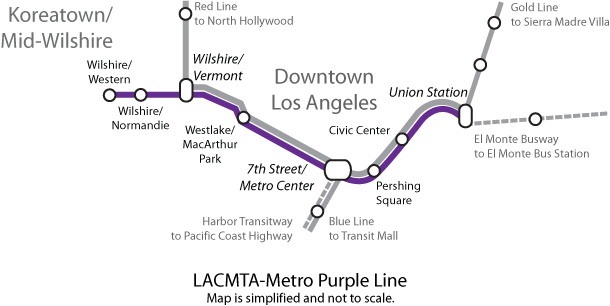
The Purple Line Extension (“D Line Extension”) is probably the most significant infrastructure project to hit the Westside since… ever? It’s adding nearly 9 miles of heavy rail and seven new stations from Wilshire/Western all the way to Westwood. The first section set to open later in 2025. We’re talking about a real subway… not light rail like the Expo Line. It’ll be running underneath some of the most expensive real estate in Los Angeles.
The extension will add stations through Miracle Mile, Beverly Hills, Century City, Westwood, and West Los Angeles. Trains are set to run every 10 minutes. That frequency is actually wild when you think about it. No more checking schedules or timing your life around bus routes. You just show up and wait a few minutes.
What is the Purple Line Extension Schedule?
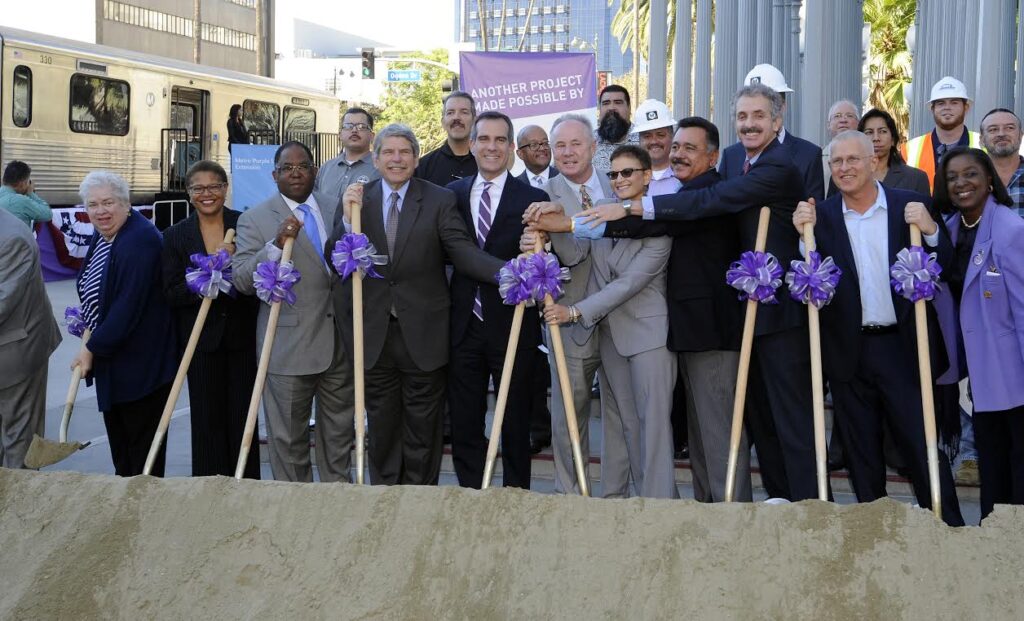
This isn’t one massive project dropping all at once. Metro is opening it in three sections. These are Section 1 in 2025, Section 2 in 2026, and Section 3 in 2027.
Section 1 adds three stations at Wilshire/La Brea, Wilshire/Fairfax, and Wilshire/La Cienega. That’s the one opening later this year.
By 2027, you’ll be able to hop on a subway in downtown LA and get to Westwood without sitting in traffic on Wilshire. It’ll be the fastest and easiest way to get to UCLA from downtown Los Angeles. If you’ve ever tried to drive from downtown to UCLA during rush hour, you know this is basically witchcraft.
How Does This Connect to Culver City?
Here’s where people get confused. The Purple Line doesn’t actually have a station in Culver City. But, Culver City residents and potential sellers should absolutely care about this project.
Interested in selling a home in Culver City?
You can call Martin at 310.729.6573, email him, or schedule a meeting
The Expo Line Changed Everything
Culver City already went through its transit transformation with the Expo Line (now the E Line). When that light rail opened in 2012, it connected Culver City to downtown LA for the first time in decades. The impact was massive. Ivy Station, that huge mixed-use development right next to the Metro station on Washington, is the perfect example of what transit-oriented development looks like.
The Purple Line is going to do for the Miracle Mile, Beverly Hills, and Westwood what the Expo Line did for Culver City. And Culver City is positioned right in the middle of it all.
The Network Effect
Here’s what actually matters: the Purple Line creates a high-capacity, high-speed connection between downtown Los Angeles, the Miracle Mile, Beverly Hills, and Westwood. Culver City sits right between these areas. If you live in Culver City, you can hop on the Expo Line, transfer at 7th Street/Metro Center downtown, and suddenly the entire Westside opens up to you via subway.
You’re looking at a completely connected Westside for the first time in LA history. No more being stuck in your car for 45 minutes to travel 7 miles. Yeah, there’ll be some walking involved, but it’ll open up how you can get around the city.
What Does The Purple Line Mean for Real Estate?
Okay, let’s get to what everyone actually wants to know: how is this going to affect property values?
Transit-Oriented Development is Real
We’ve already seen what happens when Metro brings rail to a neighborhood. Look at Culver City. Look at what’s happening in Hollywood near the Red Line stations. Look at Koreatown. Transit stations completely transform neighborhoods while making commuting easier.
Developers are already circling properties near the new Purple Line stations like sharks. Beverly Hills has been dealing with development proposals for years. Century City is going to see even more high-rises. Westwood, which has been slowly trying to get its groove back, is about to experience a renaissance.
The Property Value Jump
This is the uncomfortable truth: if you want to buy near one of these new stations, the best time to do it was five years ago. The second-best time is right now, before the first section opens.
Properties within walking distance of transit stations consistently appreciate faster than comparable properties further away. It’s not magic. It’s supply and demand. People want to live where they can ditch their cars, or at least have it as an option. Young professionals don’t want to spend two hours a day commuting. Empty nesters want walkable neighborhoods where they can grab dinner without worrying about parking.
Selling a home has several factors that can influence when it is the best time to sell a home. Now is typically the best time since it’s impossible to know all of the factors in play. However, you can expect the real estate in these areas to become more in demand over the next few years.
Rental Market Impact
If you’re an investor or thinking about buying a property to rent out, pay attention. The rental demand near these stations is going to be intense. UCLA students, hospital workers at Cedars-Sinai, entertainment industry folks working in Century City… they’re all going to want easy access to the Purple Line. If you need full-service property management, reach out to me and my team.
The Culver City Advantage
Here’s why Culver City is actually in a sweet spot:
You get the benefits of being connected to this expanded transit network without the construction chaos that Beverly Hills and Westwood have been dealing with for years. Culver City already went through its growing pains with the Expo Line construction. Now you get to enjoy the expanded connectivity while other neighborhoods figure out their parking and traffic situations.
Plus, Culver City still has that neighborhood feel that places like Century City have lost. You’ve got the Platform, the Culver Steps, Baldwin Hills Scenic Overlook, and actual local restaurants and shops. It’s a true community that happens to be incredibly well-connected via transit.
The Bigger Picture of LA’s Transit Future
This isn’t just about one subway line. Metro has been on an absolute building spree. The Purple Line is the crown jewel of their expansion plans. The total cost is around $10 billion, which tells you how seriously the city is taking this.
For decades, LA has been the poster child for car culture and urban sprawl. The Purple Line Extension represents a fundamental shift in how this city thinks about itself. We’re actually building a real transit system. It’s an actual heavy rail subway that can move massive numbers of people quickly and reliably.
If you’re thinking long-term about real estate in LA, you need to factor in this shift. The neighborhoods that embrace transit connectivity are going to thrive. The ones that fight it or ignore it are going to fall behind.
What Should Buyers and Sellers Do?
If You’re Buying
Think about proximity to transit. Even if you drive everywhere now, future buyers are going to care about this. A 10-minute walk to a subway station is going to be a major selling point within five years.
Don’t overlook neighborhoods that are one transfer away from the Purple Line. Places like Culver City, Mid-City, West Adams will get you onto the expanded network easily.
Be prepared for competition near the new stations. Multiple offer situations are going to be common, especially once Section 1 opens and people see how well it works.
If You’re Selling
If your property is near a new Purple Line station, now is actually a great time to sell. You’re close enough that buyers can imagine the convenience. However, you’re not dealing with construction disruption anymore. That’s a sweet spot to be in.
We’ll highlight transit accessibility in your marketing. Young buyers and renters prioritize this more than previous generations did.
If You’re Just Watching
Keep an eye on the opening dates. When Section 1 opens later this year, pay attention to how ridership develops and how neighborhoods respond. That’ll tell you a lot about what to expect when Sections 2 and 3 open.
The Real Talk About Construction and Growing Pains
Let’s be honest: major infrastructure projects are disruptive. Beverly Hills has been dealing with construction for years. Streets closed, noise, dust, all of it. Some businesses struggled during the construction phase.
But here’s the thing, we’re on the other side of that now. The hard part is almost done. What comes next is decades of benefits. That subway isn’t going anywhere. It’s not like a trendy restaurant that might close in three years. This is permanent infrastructure that will still be moving people in 50 years.
How This Changes the Commute Equation
Think about the math here. Right now, commuting from Westwood to downtown LA during rush hour can easily take 45 minutes to an hour by car. Add in parking time and stress, and you’re looking at a significant chunk of your day.
With the Purple Line, that same trip will take about 25 minutes, station to station. No traffic to worry about. No parking to find. You can read, work on your laptop, or just zone out. That time savings adds up to hours every week.
For families deciding where to live, this changes the equation completely. Suddenly you can live in Westwood and work downtown without destroying your quality of life. Or live in Culver City and have easy access to jobs in Century City or Beverly Hills.
The Environmental Angle
We have to talk about this because it matters, especially to younger buyers. LA has some of the worst traffic congestion in the country, and that means some of the worst air quality. The Purple Line is going to take thousands of cars off the road every day.
If you’re selling to millennial or Gen Z buyers, the environmental benefits of transit access actually matter to them. It’s not just about convenience – it’s about carbon footprints and climate impact. Don’t underestimate this factor.
What About Parking?
Here’s something that doesn’t get discussed enough: as neighborhoods become more transit-accessible, parking requirements might actually decrease. Cities are starting to realize that if you’re next to a subway station, you don’t need three parking spaces per unit. This is huge for developers and for housing affordability. Less parking means lower construction costs, which can mean lower prices (or at least slower price increases). It also means more density is possible, which helps address LA’s housing shortage.
For current homeowners, this is a double-edged sword. More development might change the character of your neighborhood. It also tends to increase property values.
The Century City Factor
Century City deserves its own mention here because it’s about to explode. It’s already a major employment center with massive office towers and the Westfield mall. Add a subway station, and it becomes one of the most connected business districts in LA.
For Culver City residents, this is particularly relevant. The commute from Culver City to Century City has always been annoying. It’s too far to walk, too close to justify a long drive, and the bus takes forever. With the Purple Line, you hop on the Expo Line, transfer downtown, and boom – you’re in Century City! That opens up a lot of job opportunities.
Looking Ahead
The Purple Line Extension is just one piece of LA’s transit expansion, but it’s a crucial one. It connects the Westside, which has historically been cut off from the rest of the city’s rail network, to downtown and eventually to the rest of the system.
For Culver City, it means your existing transit connectivity just got a whole lot more valuable. You’ll be connected to the entire Westside.
For buyers and sellers throughout the region, it means you need to start thinking about real estate through a transit lens. The days of evaluating properties purely based on freeway access are ending. Smart buyers are looking at transit maps now.
The Bottom Line
The Purple Line Extension is going to fundamentally change the Westside real estate market. Properties near the new stations are going to become more valuable. Neighborhoods like Culver City that are well-connected to the expanded network are going to benefit. Commute patterns are going to shift. Development is going to intensify near transit.
This isn’t speculation. This pattern has played out in cities around the world. When you build real, functional transit, people respond. They change where they choose to live. They change how they move through the city. And real estate values reflect those changes.
The first extension trains start running later this year. By 2027, the entire extension will be complete. LA is finally getting the transit system it should have built decades ago. And, the real estate market is going to reflect that for years to come… even if you call it the D Line.